2026 EGM 7 Oct
Sponsors Welcome Learn More

What is Fencing
Fencing is a modern Olympic combat sport that combines speed, agility, precision, strategy and quick decision-making.
What Is Fencing?
Fencing is a modern Olympic combat sport that combines speed, agility, precision, strategy and quick decision-making. Two fencers compete against each other on a narrow playing area called a piste, using one of three fencing weapons: foil, épée or sabre.
Although fencing has its roots in historical sword fighting, modern fencing is a highly regulated and competitive sport. Fencers wear protective clothing, masks and specialised equipment, allowing them to train and compete safely while developing their technique and athletic ability.
Whether you are looking for a new sport to try, a fun way to stay active, or a competitive activity, fencing offers something for people of all ages and abilities.
How Does Fencing Work?
A fencing bout is a contest between two fencers who attempt to score points by making a valid touch on their opponent with their weapon.
Fencing is much more than simply being the fastest person to attack. A successful fencer needs to understand their opponent, control distance, use effective footwork and make decisions in fractions of a second.
Fencers constantly switch between attack and defence, using techniques such as attacks, parries, ripostes, counter-attacks and changes of distance to create opportunities to score.
This combination of physical movement and tactical thinking is what makes fencing such a unique sport.
The Three Fencing Weapons
There are three disciplines in modern fencing: foil, épée and sabre. Each weapon has different rules, target areas and techniques.
Foil
Foil is a lightweight thrusting weapon. Fencers score by hitting their opponent with the point of the blade, with the valid target area being the torso.
Foil places a strong emphasis on technique, timing and the tactical rules known as right of way. It is often associated with precise attacks, controlled movements and carefully constructed exchanges.
Épée
Épée is also a thrusting weapon, but unlike foil, the entire body is a valid target.
Because the whole body can be targeted, épée fencing often involves careful distance management, patience and tactical awareness. Fencers may spend time looking for a small opening before committing to an attack.
Sabre
Sabre is the fastest of the three fencing weapons. Fencers can score using both the edge and the point of the blade, and the valid target area is everything above the waist, including the head and arms.
Sabre is known for its explosive attacks, fast footwork and rapid exchanges, making it an exciting discipline to watch and participate in.
Is Fencing a Sport?
Yes. Fencing is an internationally recognised competitive sport and has been part of the Olympic Games since the first modern Olympics in 1896.
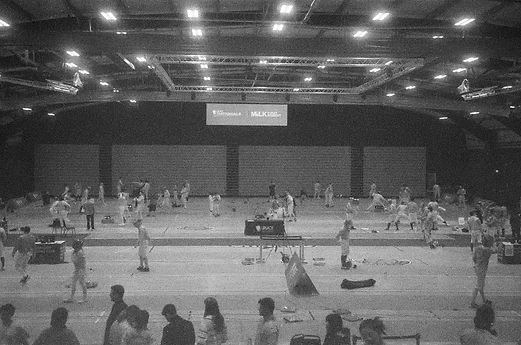
Today, fencing is practised around the world at recreational, university, club, national and international levels. Competitions take place across all three weapons, with individual and team events available at different levels.
For competitive fencers, the sport can provide a pathway from local club competitions to national and international events.
What Are the Benefits of Fencing?
Fencing provides a combination of physical exercise and mental challenge.
Regular fencing training can help develop:
-
Speed and reaction time
-
Balance and coordination
-
Agility and footwork
-
Strength and endurance
-
Concentration and focus
-
Strategic and tactical thinking
-
Confidence and discipline
Because fencing requires you to react to another person rather than simply follow a set routine, every session can be different. You learn to observe your opponent, anticipate their actions and adapt your approach.
Is Fencing Good for Beginners?
Absolutely. You do not need previous fencing experience to get started.
Beginner fencing sessions introduce the fundamentals gradually, including basic footwork, blade movements, attacks and defensive techniques. New fencers can learn at their own pace while developing confidence and becoming familiar with the equipment and rules.
Fencing can be enjoyed by children, teenagers, university students and adults, making it a versatile sport for people looking to try something different.
You also don't need to be naturally athletic to start fencing. Fitness and technique develop over time through regular training.
Fencing as a Competitive Sport
For those who enjoy competition, fencing offers opportunities to compete against other fencers at a variety of levels.
Fencers can take part in club competitions, university competitions, regional events, national competitions and international events. Competitive fencing provides an opportunity to set goals, track your progress and test your skills against different opponents.
University students can also compete through BUCS (British Universities & Colleges Sport), while British Fencing supports the development and organisation of fencing across Great Britain. At the international level, the Fédération Internationale d'Escrime (FIE) governs international fencing competition.
Why Try Fencing?
Fencing is a sport where every bout is a problem to solve. You have to think quickly, control your movement, understand your opponent and make decisions under pressure.
It can be competitive, social and challenging at the same time. You can fence simply because you enjoy the sport, or set yourself the goal of competing and progressing through the different levels of fencing.
If you've never picked up a fencing weapon before, that's no problem. Every experienced fencer was once a beginner.
Start Fencing With Us
Looking for a fencing club near you, a new sport to try, or somewhere to learn fencing as a beginner?
Our club welcomes people interested in discovering fencing, developing their skills and becoming part of our fencing community.
Come and try fencing with us and discover the sport for yourself.